
FlexArmor vs Rubber Roof: Which Is Right for Your RV?
Comparing FlexArmor polyurea and traditional EPDM rubber roofing for RVs — installation, lifespan, maintenance, seam vulnerability, warranty, and long-term cost. Find out which system makes sense for your rig in Florida.
If you own an RV, the roof becomes a conversation you cannot avoid. Whether you are dealing with a slow leak, bubbling membrane, or simply planning ahead, you will eventually face a choice between sticking with a traditional rubber (EPDM) roof or upgrading to a spray-applied polyurea system like FlexArmor the original sprayed roof system.
Both options can protect your rig. But they are not equal — especially in Southwest Florida or harsh climates, where the combination of intense UV exposure, freezing temperatures, heavy seasonal rain, and high humidity accelerates wear on every roofing material. This comparison is designed to help you make an informed decision based on your situation, not just the upfront price tag.
What Is a Rubber (EPDM) Roof?
EPDM stands for ethylene propylene diene monomer — a synthetic rubber membrane that has been the industry standard for RV roofing for decades. It is typically sold in large sheets that are adhered or mechanically fastened to the roof deck, then sealed at the edges and around penetrations (vents, skylights, AC units) with lap sealant.
EPDM is widely available, relatively inexpensive to install, and familiar to most RV service centers.
What Is FlexArmor?
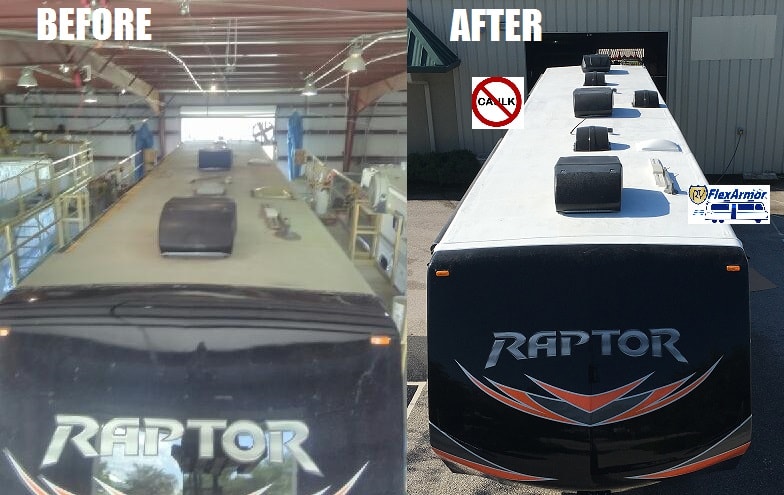
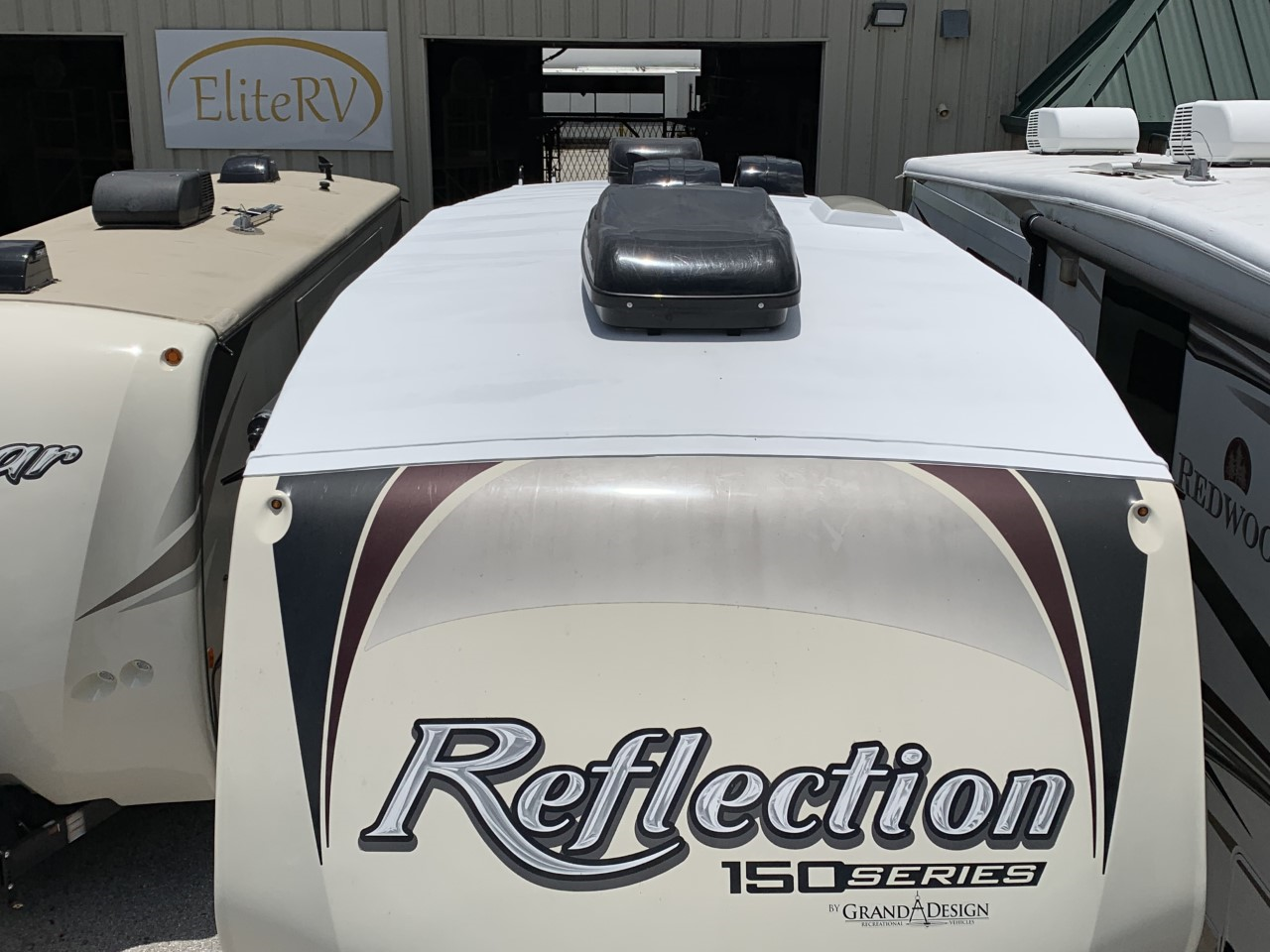
FlexArmor is a spray-applied polyurea roofing system developed specifically for RVs. Rather than a sheet membrane, it is sprayed directly onto the existing roof substrate, where it bonds chemically and cures into a single, seamless shell. It is not a coating applied over an old rubber roof — it is a complete roof replacement system.
EliteRV in Palmetto is the only authorized FlexArmor installer serving the Palmetto, Bradenton, Sarasota, and greater Tampa Bay area. Visit our RV roof services page for full details on the installation process and what to expect.
Side-by-Side Comparison
Installation Process
EPDM: Installation involves cleaning the roof deck, applying adhesive, rolling out the membrane, and trimming to fit. Seams are created wherever sheets overlap or meet a penetration. Each seam is sealed with lap sealant, which must be inspected and reapplied on a regular schedule. The process is relatively fast and can be completed by many RV service shops.
FlexArmor: Installation requires a certified applicator and specialized spray equipment. The existing roof surface is prepared, and the polyurea is sprayed in a controlled pass that bonds directly to the substrate. There are no seams, no adhesive layers, and no separate sealant applications around vents or edges. The cure time is rapid, and the finished surface is a single continuous shell. No maintenance is required again, a true one and done.
Lifespan
EPDM: A well-maintained EPDM roof typically lasts 10 to 15 years. Lifespan depends heavily on how consistently the lap sealant is maintained and whether any punctures or tears are caught early.
FlexArmor: FlexArmor carries a lifetime warranty for as long as you own the RV. The polyurea material itself does not degrade under UV exposure the way rubber membranes do, and because there are no seams, the primary failure point of rubber roofs is eliminated entirely.
Seam Vulnerability
This is one of the most significant differences between the two systems.
EPDM: Every seam is a potential leak point. Lap sealant dries out, cracks, and separates — particularly in Florida's heat. Most RV roof leaks originate at seams around vents, AC units, antennas, and roof edges. Staying ahead of sealant failure requires inspections at least twice a year and resealing as needed.
FlexArmor: Because the system is sprayed as a single continuous layer, there are no seams. Penetrations are encapsulated within the coating rather than sealed on top of it. This eliminates the most common source of RV roof leaks.
Maintenance Requirements
EPDM: Requires regular inspection of all seams and lap sealant, cleaning with rubber-safe products, and periodic resealing. Owners who skip annual maintenance often discover leaks only after water damage has already reached the interior.
FlexArmor: Maintenance is minimal. Periodic cleaning is recommended, but there is no sealant to inspect or reapply. The surface is resistant to punctures, UV degradation, and standing water.
Warranty
EPDM: Manufacturer warranties on EPDM membranes typically range from 5 to 12 years, and they often exclude labor and installation-related failures. Lap sealant is generally not covered at all.
FlexArmor: Backed by a lifetime warranty tied to vehicle ownership. This warranty covers the material and the installation, and it transfers with the RV if you sell it — which can be a meaningful selling point.
Cost Over Time
Upfront, EPDM is less expensive. A rubber roof replacement costs significantly less than a FlexArmor installation. However, the long-term math is worth examining carefully.
EPDM requires ongoing maintenance costs — sealant, inspections, and periodic resealing. More importantly, when EPDM fails (and it eventually will), the resulting water damage to walls, flooring, cabinetry, and insulation can cost thousands of dollars to repair. Many RV owners in the Sarasota and Tampa Bay area have discovered that a single undetected leak costs more to remediate than a FlexArmor installation would have.
FlexArmor is a higher upfront investment. Over a 10- to 15-year ownership period, the combination of eliminated maintenance costs, avoided water damage, and the lifetime warranty typically makes it the lower-cost option in total.
Performance in Florida Heat, UV, and Rain
Florida's climate is among the most demanding for RV roofing in the country. Prolonged UV exposure degrades EPDM membranes and dries out lap sealant faster than in northern climates. Heavy summer rain events put pressure on every seam. High humidity means that any moisture that does penetrate has difficulty drying out.
FlexArmor's polyurea chemistry is UV-stable and does not soften or degrade under sustained heat. The seamless surface sheds water without relying on sealant integrity. For RVs that live outdoors year-round in Southwest Florida — whether stored in Palmetto, parked in Bradenton, or traveling the Gulf Coast — this performance difference is material.
When Rubber Makes Sense
EPDM is a reasonable choice if you are on a tight budget, plan to sell the RV within a few years, or own an older rig where the economics of a premium roof system do not pencil out. If you are disciplined about annual inspections and maintenance, a rubber roof can serve you adequately.
When FlexArmor Is the Better Investment
FlexArmor makes sense if you plan to keep your RV for the long term, want to eliminate the risk of seam-related leaks, or are tired of the maintenance cycle that rubber roofs demand. It is particularly well-suited to RVs that spend significant time in Florida's sun and rain. If you have already dealt with one water damage repair, the case for a seamless system becomes straightforward.
Schedule a Free Roof Evaluation at EliteRV
Not sure which direction is right for your rig? EliteRV in Palmetto offers free roof evaluations for RV owners throughout the Palmetto, Bradenton, Sarasota, and Tampa Bay area. Our team will assess your current roof condition, walk you through the options honestly, and give you a clear picture of what your roof needs — whether that is a FlexArmor installation or something else entirely.
Contact EliteRV today to schedule your evaluation and get an expert opinion before your next roof problem becomes a water damage problem. Request a free roof evaluation online or call (941) 981-5366.