
New RV Owner Orientation: What to Learn Before Your First Trip
The dealer walkthrough at purchase is rarely enough. A proper new owner orientation with a qualified technician covers every system in your RV — so you know how everything works before you are 200 miles from home trying to figure it out.
Buying an RV is one of the more significant purchases most people make. The excitement of taking delivery tends to overshadow a practical reality: most new RV owners leave the dealership without a working understanding of the systems they just bought.
The dealer walkthrough — if it happens at all — is typically rushed, happens at the worst possible time (you are signing paperwork, your family is excited, the salesperson has another appointment), and covers the highlights rather than the details. By the time you are at a campground trying to figure out why the water heater is not lighting or why the slide-out is making a noise it did not make at the dealer, the walkthrough is a distant memory.
A new owner orientation with a qualified technician is the solution to this problem. This post explains what a good orientation covers, why it matters more than most owners expect, and what to look for when scheduling one.
Why the Dealer Walkthrough Is Not Enough
Dealer walkthroughs are designed to satisfy a liability checkbox, not to produce a knowledgeable owner. The person conducting the walkthrough is often a delivery coordinator rather than a technician — someone who knows the talking points but may not have hands-on experience with the systems they are demonstrating.
The timing is also wrong. You are at peak excitement and distraction at the moment of delivery. You are not in a frame of mind to absorb technical information about LP gas regulators and battery disconnect switches. And the walkthrough happens once, at a pace set by the dealer, with no opportunity to practice the procedures yourself.
A proper orientation is different. It happens at your pace, in a service environment, conducted by a technician who works on these systems every day. You can ask questions, practice operating the systems yourself, and come back to anything that did not click the first time. The goal is not to check a box — it is to make sure you actually know how your RV works.
What a Thorough Orientation Covers
A complete new owner orientation at EliteRV covers every major system in the coach. Here is what that looks like in practice:
Slide-Out Operation and Maintenance
Slide-outs are one of the most frequently misunderstood systems in an RV. We cover how to operate them correctly — including the leveling requirements that protect the slide mechanism — what the seals do and how to maintain them, and what sounds and behaviors are normal versus signs of a problem. We also cover what to do if a slide fails to retract, which is a situation every owner with slides should be prepared for. For a deeper look at slide-out systems, see our slide-out repair and service page.
Leveling Systems
Automatic leveling systems are convenient but not foolproof. We walk through the correct leveling procedure for your specific system, the importance of leveling before extending slides, and how to manually level the coach if the automatic system fails. We also cover the stabilizer jacks — what they are for (stabilization, not leveling) and how to use them correctly.
LP Gas System
The LP gas system powers the furnace, water heater, stovetop, and oven in most RVs. We cover how to safely open and close the tank valves, how the regulator works, how to check for leaks, and what to do if you smell gas. We also cover the automatic LP shutoff systems that many coaches have, and how to reset them after a low-pressure event.
Water Systems
Fresh water, gray water, and black water systems each have their own procedures and failure modes. We cover how to connect to city water versus using the onboard tank, how to operate the water pump, how to winterize the system if needed, and the correct procedure for dumping and flushing the holding tanks. Proper black tank management is one of the areas where new owners most often make mistakes — we cover it in detail.
Water Heater Operation
RV water heaters typically operate on LP gas, electric, or both. We cover how to light the pilot (on older units), how to switch between LP and electric modes, how to bypass the water heater for winterization, and what the anode rod is and when to replace it.
Electrical Systems
RV electrical systems are more complex than most owners realize. We cover the 12-volt DC system (house batteries, the converter/charger, the battery disconnect), the 120-volt AC system (shore power connection, the transfer switch, the inverter if equipped), and how the two systems interact. We also cover the generator — how to start and stop it, how to connect it to the coach, and basic maintenance requirements.
HVAC Systems
We walk through the rooftop AC units — how to operate them, how to clean the filters, and what to do if they are not cooling effectively. For motorhomes, we also cover the chassis AC system and how it differs from the rooftop units. If the coach has a heat pump, we cover how it operates differently from a standard AC unit.
Awnings
Power awnings are a common source of damage for new owners who do not understand how to operate them safely. We cover how to extend and retract the awning, the wind speed limits that should trigger retraction, and how to manually retract the awning if the motor fails. We also cover awning tie-downs and when to use them.
Towing and Hitching (for Towable Units)
For travel trailers and 5th wheels, we cover the correct hitching procedure, weight distribution hitch setup if applicable, brake controller adjustment, and the safety checks that should happen before every departure. We also cover the breakaway switch — what it does and how to test it.
Basic Maintenance Tasks
We walk through the maintenance tasks that owners can and should perform themselves: checking and maintaining tire pressure, inspecting roof seams and seals, lubricating slide-out seals and mechanisms, checking battery water levels (on flooded lead-acid batteries), and the pre-trip inspection checklist that should happen before every trip.
Who Should Get an Orientation?
The obvious answer is first-time RV owners — but the honest answer is broader than that.
First-time owners should absolutely schedule an orientation before their first trip. The cost of an orientation is trivial compared to the cost of a repair caused by operating a system incorrectly.
Experienced owners who switched brands or types will find that systems work differently from one manufacturer to the next. The LP shutoff, the slide controls, the battery disconnect, and the water heater bypass can all be implemented differently. If you moved from a travel trailer to a motorhome, or from one brand to another, an orientation on the new unit is a smart investment.
Owners who bought used often have no documentation and no dealer walkthrough at all. An orientation fills that gap and gives you a baseline understanding of the specific unit you bought.
Owners who have had their RV for a while but never fully learned it — this is more common than you might expect. Many owners use their RV for years while avoiding systems they do not understand. An orientation can fill those gaps and give you confidence to use the full capability of your coach.
What to Bring to Your Orientation
To get the most out of your orientation, bring:
- The owner's manual for the coach and any major appliances (if you have them)
- A list of questions you have accumulated since purchase
- A phone or tablet to take notes or record demonstrations
- Anyone else who will be operating the RV — spouses, adult children, travel partners
The orientation is most valuable when everyone who will be using the RV is present. Systems that seem obvious to one person may be unfamiliar to another.
Schedule Your Orientation at EliteRV
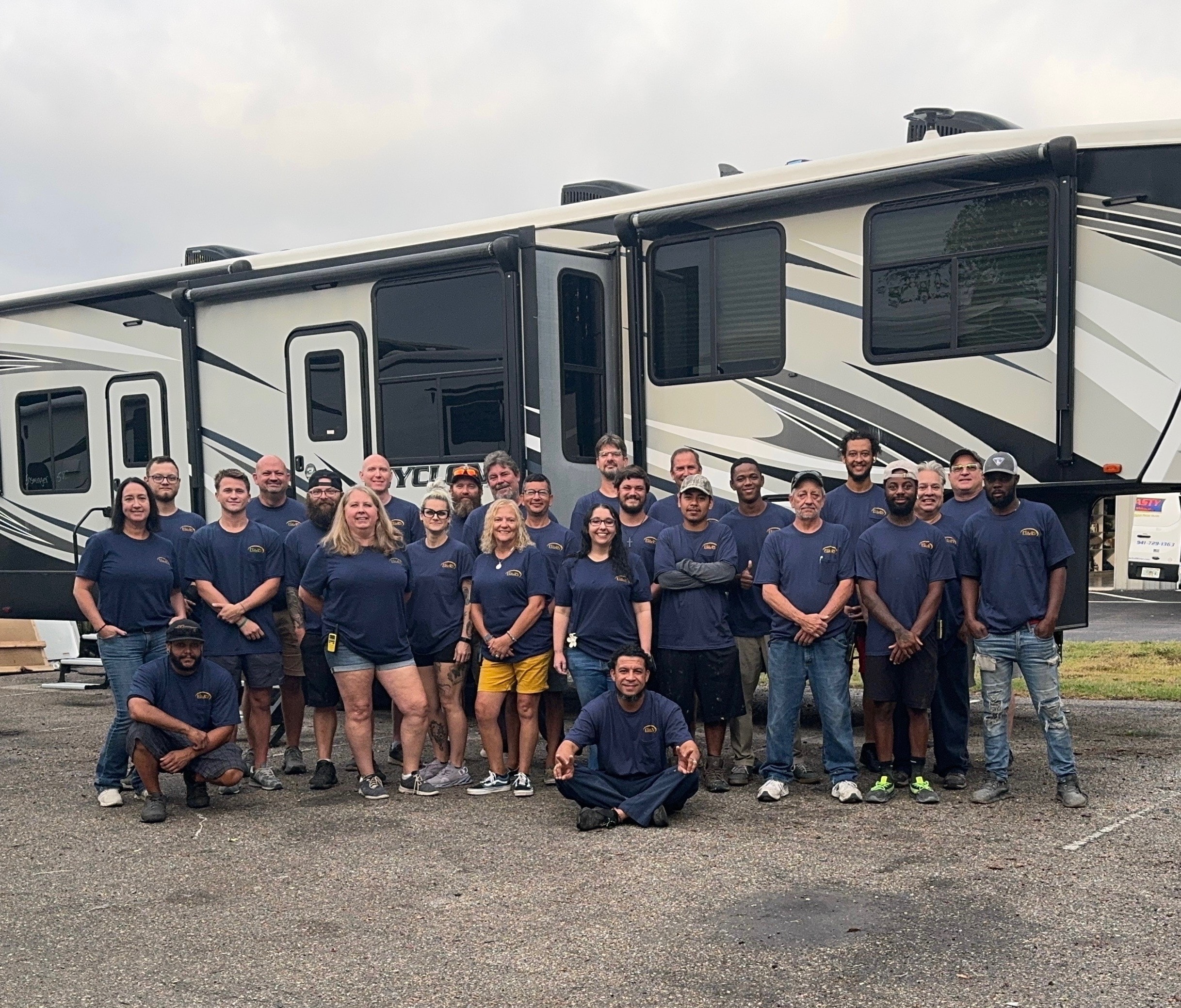
EliteRV offers new owner orientations for any RV — new purchase, used purchase, or a unit you have owned for a while but never fully learned. Our technicians work on these systems every day and can answer questions that go beyond the owner's manual.
Contact EliteRV to schedule your new owner orientation. We serve RV owners throughout Palmetto, Bradenton, Sarasota, and the greater Tampa Bay area. Most orientations take two to four hours depending on the size and complexity of the coach.